St. Lucian Heritage and Local Traditions
The Indigenous Soul: Atebyra and Yokahu
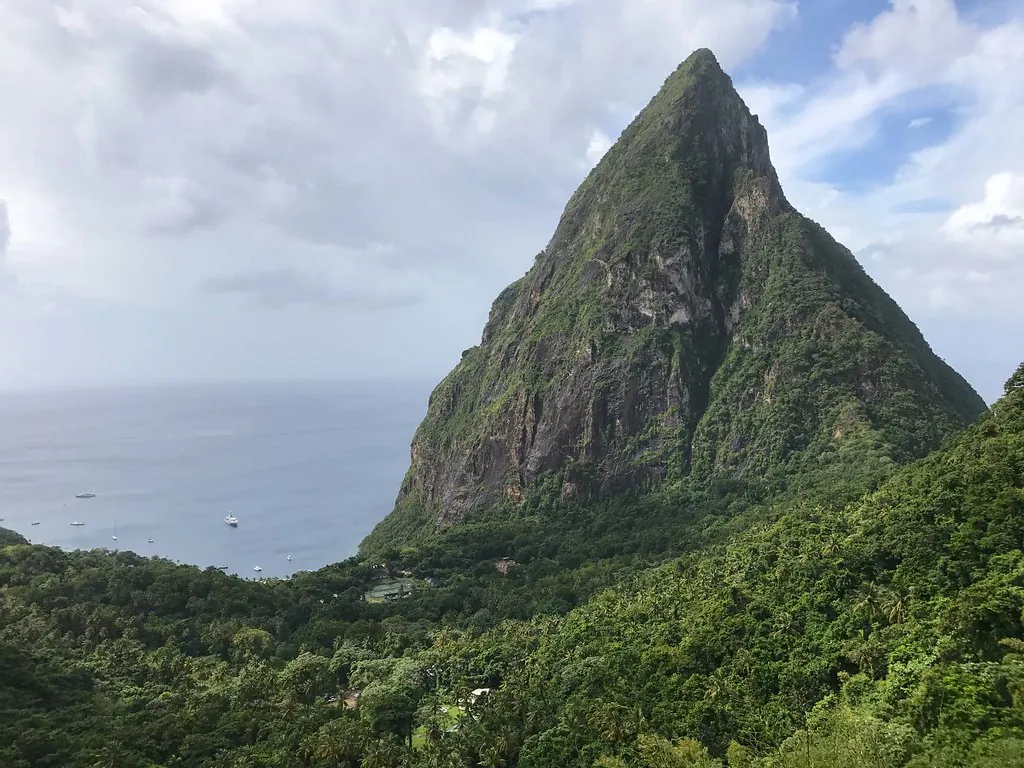
Long before the town of Soufrière was formally established in 1746, the island’s first inhabitants, the Arawaks and later the Kalinago (Caribs), recognized the Pitons as sentient deities. In the Amerindian pantheon, the landscape was never inanimate. The smaller peak, Petit Piton, was worshipped as **Atebyra**, the Goddess of Fertility, Food, and the Manioc root. Because the base of Petit Piton sits adjacent to the healing mineral waters of the region, it was considered hallowed ground where the earth’s internal heat met the life-giving forest.Conversely, the larger Gros Piton was the domain of **Yokahu**, the God of Fire, Thunder, and Rain. The frequent shroud of clouds around its 798-meter summit was interpreted as the physical presence of the deity. For those planning a visit to the heights of these peaks, it is essential to understand that for the original islanders, ascending these mountains was not an act of recreation but a communal engagement with the divine. This spiritual legacy is still physically present in the “Family of Three” petroglyph site located at the Stonefield Estate in Soufrière, featuring rare carvings of a male, female, and child figure etched into the volcanic rock.The Pitons are the architectural pillars of our theology and the silent guardians of our island’s history.
Sacred Geography: The Twin Peaks Compared
| Feature | Petit Piton (Atebyra) | Gros Piton (Yokahu) |
|---|---|---|
| Primary Deific Attribute | Fertility, Food, and Manioc | Fire, Thunder, and Rain |
| Geological Elevation | 743 meters (2,438 ft) | 770 meters (2,526 ft) |
| Nearby Cultural Landmark | Piton Falls Mineral Springs | Sulphur Springs Park |
| Traditional Association | Growth and Abundance | Protection and Power |
The Floral Rivalry: La Rose and La Marguerite
One of the most peculiar and enduring aspects of St. Lucian heritage is the existence of two rival floral societies: **La Rose (Lawòz)** and **La Marguerite (La Magwit)**. This is not a mere gardening club; it is a structured social hierarchy modeled after a mock-European royal court. Each society has its own King, Queen, and a retinue of “officials” including “The Nurse,” “The Policeman,” and “The Magistrate.” During their respective festivals, these officials have the authority to “arrest” and “fine” bystanders who do not show proper deference to their flower.- Gwan Fèt Lawòz: Celebrated on August 30, the Feast of St. Rose de Lima. The followers of the Rose are known for their exuberant singing and elaborate, vibrant displays.
- Gwan Fèt La Magwit: Celebrated on October 17, the Feast of St. Margaret Mary Alacoque. This society is traditionally characterized by a more refined, choral-focused approach to their celebrations.
Modern Pulse: Jounen Kwéyòl and 2025 Identity
Jounen Kwéyòl (2026)
Scheduled for October 25, 2026, the annual Jounen Kwéyòl (Creole Day) sees the entire island donning the Madras-patterned ‘Wob Dwiyet’ and ‘Jip’ styles. It is a period of intense cultural reclamation where the Creole language is prioritized in media and daily discourse. (The theme for the previous edition in 2025 was "Kwéyòl Sé Fòs Nou," or "Creole Is Our Strength.")The Host Communities
Each year in October, the Folk Research Centre (FRC) designates host communities for **Jounen Kwéyòl** (Creole Heritage Month). In 2025, **Belle Vue (Vieux Fort)** and **Babonneau** served as the primary hosts. Those discovering the Belle Vue district during the festival season will find a region teeming with ancestral storytelling and traditional culinary demonstrations, such as the preparation of green fig and saltfish over open coal pots.Folklore and the Legend of the Bolom
St. Lucian culture possesses a dark, fascinating mythological underbelly, most notably represented by the **Bolom**. According to local folklore, the Bolom is a small, powerful spirit roughly two feet tall. The legend of its creation is specific and haunting: a Bolom is allegedly formed by keeping a raw egg under one’s armpit or pillow for three consecutive days, starting on Good Friday.While these stories might seem like campfire tales, they influence the local psyche and the way people interact with the dense rainforests surrounding the Pitons. When navigating the winding roads of Soufrière at night, you will often find locals who still hold a quiet respect for the “unseen” inhabitants of the woods.Once summoned, a Bolom must be kept constantly occupied with tasks, or it will turn on its owner. To retire a Bolom, one must assign it an impossible task, like fetching water from the Caribbean Sea using a basket with holes.
St. Lucian Oral Tradition
The Cocoa-rina: Dancing the Cocoa
Agriculture and tradition are inseparable in the Soufrière district. The “Cocoa-rina” ritual, also known as “Dancing the Cocoa,” is a communal process of polishing dried cocoa beans. Workers perform a rhythmic, barefoot dance over the beans inside large metal cauldrons. This process uses the friction of the feet to give the beans a smooth, lustrous finish before they are processed into chocolate. At estates like Fond Doux, located just minutes from the nearby Sulphur Springs, visitors can witness this rhythmic labor, which turns industrial processing into a form of folk art.Bush Medicine: The Island’s Natural Pharmacy
The lush vegetation at the base of the Pitons is more than just scenery; it is a source of traditional medicine known locally as **Bush Medicine** (or *Remèd Razyé* in Kwéyòl). Generations of St. Lucians have relied on these plants for daily wellness, a practice that aligns with the conservation and sustainability efforts of the region.- Atoumo (Alpinia zerumbet): The name translates to “À tous maux” (for all ills). It is used as a daily tea to regulate digestion and treat flu symptoms, making it a staple in Soufrière households.
- Carpenter’s Grass (Justicia pectoralis): Frequently used as a relaxing tonic and to aid with respiratory or circulation issues, this plant is a primary component of the regional “bush medicine” culture.
Preserving the Heritage of Soufrière
Visiting the Soufrière region is more than a sightseeing trip; it is a cultural pilgrimage to the first French capital of the island. Established in 1746, the town was specifically located for its proximity to the mineral springs and the fertile volcanic soil that sustained the early economy. Today, the town serves as the gateway for those planning a waterfall circuit, yet it is vital to approach the land with the same reverence the Arawaks once did.The visitor guidelines for the Piton Falls and the surrounding peaks emphasize a “leave no trace” philosophy. This is not just about environmental protection; it is about honoring the ancestral connection to a landscape that has provided physical and spiritual sustenance for over a millennium. By respecting the land, you are participating in a tradition of stewardship that ensures the spirits of Atebyra and Yokahu remain undisturbed for future generations.Cultural & Heritage Landmarks of Soufrière
Authority Resources & Further Reading
To deepen your understanding of the intricate history and cultural preservation of St. Lucia, we recommend consulting the following official resources:- UNESCO Pitons Management Area [Official Website]
- Saint Lucia National Trust [Official Website]
- Monsignor Patrick Anthony Folk Research Centre [Official Website]
- Saint Lucia Tourism Authority [Official Website]
Note: The 2026 Jounen Kwéyòl (Creole Day) festivities will take place on Sunday, October 25, 2026. Host communities rotate annually and are typically announced mid-year. If you are visiting during late October, ensure you have arranged safe transportation and prepared for a full day of cultural immersion.