In the southern reaches of Saint Lucia, the earth’s crust offers a rare geological hospitality. While most Caribbean cascades are defined by their bracing, mountain-cold run-off, Piton Falls operates as a natural tepidarium, a term historically reserved for the warm rooms of Roman baths. Here, the water is not merely a visual spectacle but a therapeutic medium, heated by the profound geothermal energy of the Qualibou Caldera. This 30,000-year-old volcanic legacy transforms a simple soak into a sophisticated hydrotherapy session, where the heat of the magma chamber meets the humidity of the tropical canopy.
The Geothermal Pulse of Soufrière
The thermal activity at Piton Falls is inextricably linked to the Soufrière Volcanic Center, a massive 3.5 x 5 km-wide geothermal field known as the Qualibou Caldera. According to the Global Volcanism Program, this caldera formed during a series of cataclysmic collapses between 32,000 and 39,000 years ago. Today, that ancient energy remains active just beneath the surface, with a primary magma chamber located approximately 2 kilometers (1.2 miles) underground. This proximity ensures that the groundwater circulating through the Belle Vue region is consistently infused with heat before it ever reaches the surface basins.
Unlike the more volatile geothermal displays at the nearby Sulphur Springs, which can reach boiling temperatures, the waters at Piton Falls have tempered as they travel through the subterranean basalt. This cooling process creates a “goldilocks” zone for wellness—temperatures that are high enough to induce vasodilation and muscle relaxation but low enough for extended immersion. For visitors planning a broader day of exploration, understanding this heat source is key to appreciating why this site is often included in a Soufrière Waterfall Circuit.
Thermal Profile & Therapeutic Experience
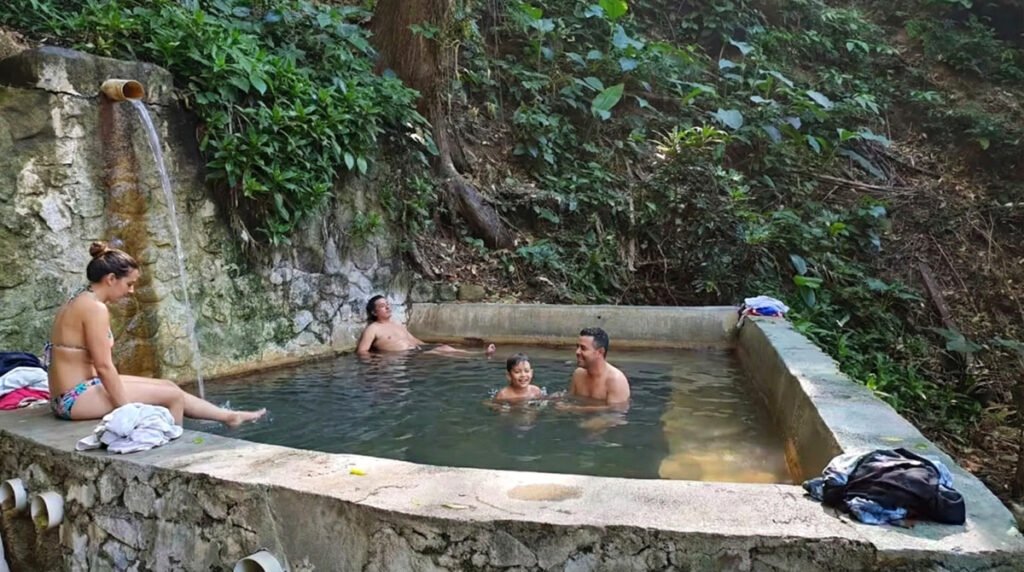
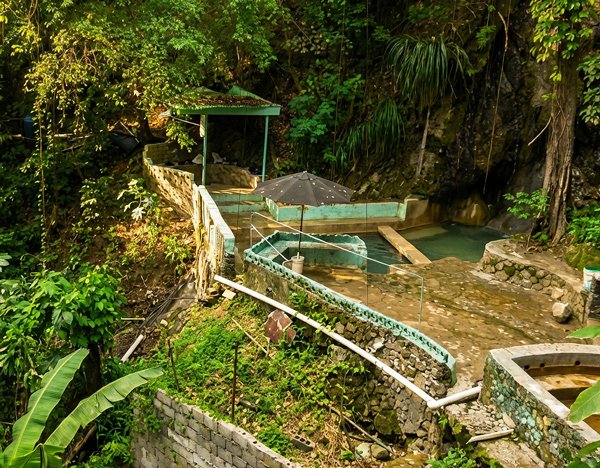
Piton Falls offers a refreshing mix of thermal water and river currents. The site features a cascading waterfall that feeds into man-made concrete basins, creating a relaxing environment. While not an engineered spa, the natural mix of warm volcanic runoff and cooler river water provides a soothing, tepid bathing experience perfect for unwinding after a hike.
| Pool Area | Temperature | Best For | Recommended Duration |
|---|---|---|---|
| The Main Waterfall | ~30°C (86°F) | Shoulder massage & refreshing dip | 15-20 Minutes |
| Soaking Pools | ~33°C (91°F) | Relaxation & mineral soaking | 20-30 Minutes |
| Lower Stream | ~28°C (82°F) | Cooling down & wading | Unlimited |
Unlike the bracing cold of typical island waterfalls, Piton Falls acts as a natural warm-water oasis, utilizing the same volcanic veins that feed the famous Sulphur Springs.
St. Lucia Wellness Guide
The Science of the Soak: Bio-Available Minerals
The true distinction of Piton Falls lies in its chemical composition. While many water features in the Pitons Management Area [Official Website] are prized for their clarity, the waters here are characterized by a high concentration of Ferrous Iron (Iron II). When this iron-rich water emerges from the earth and comes into contact with atmospheric oxygen, it undergoes a natural oxidation process. This reaction is responsible for the distinct orange-brown staining visible on the concrete basins—a visual indicator of high mineral density rather than a lack of cleanliness.
From a wellness perspective, soaking in these mineral-dense waters allows for transdermal absorption. Magnesium, a critical mineral for neuromuscular health, is found in significant quantities here. Magnesium absorption through the skin is believed to aid in muscle recovery and nervous system regulation, making it a favorite for those who have just completed the rigorous ascent of Gros Piton. Furthermore, the pH levels at Piton Falls are near-neutral, ranging between 6.8 and 7.2. This makes the experience far more accessible for visitors with sensitive skin conditions, such as eczema, who may find the highly acidic (pH 2-3) mud at the nearby Sulphur Springs too aggressive.
Hydrodynamics: The 30-Foot Natural Massage
Beyond the chemistry, the physical mechanics of the waterfall provide a form of mechanical therapy known as hydro-percussion. The main drop of Piton Falls is precisely 30 feet (9 meters). As the water falls from this height, it gains enough kinetic energy to create a significant hydrostatic pressure upon impact. By positioning oneself directly under the flow, the water acts as a “percussion massage” specifically targeting the trapezius and rhomboid muscle groups.
This “natural massage” effect is often cited by locals as a primary reason for the site’s popularity. It is a primitive but effective form of myofascial release. For those arriving on a St. Lucia Land and Sea Tour, the transition from the motion of the Caribbean Sea to the steady pressure of the falls provides a grounding sensory experience that resets the equilibrium.
Flora and the “Forest Bathing” Experience
Visitors to the Belle Vue area of Soufrière often embrace the principles of Shinrin-yoku, or “Forest Bathing,” during the Piton Falls experience. This practice complements the rejuvenating effects of the warm mineral water, which cascades from a height of 30 feet. The falls are fed by thermal springs, creating a soothing environment rich in negative ions—molecules generated by the moving water that are believed to produce biochemical reactions increasing serotonin levels, helping to alleviate stress and boost energy.
- Blue Mahoe (Hibiscus elatus): The trail to the pools is lined with these trees. Their inner bark was traditionally used by locals for mucilaginous skin washes, which complement the mineral soak.
- St. Lucia Pewee: Look up into the canopy to spot the Contopus oberi, an endemic bird species that thrives in the high-humidity microclimate of the falls.
- The “Julie” Mango Connection: After your soak, a short trip to The Mango Tree Restaurant [Official Site] allows for electrolyte replenishment with a traditional Creole coal pot stew, served under a tree that famously survived Hurricane Allen in 1980.
The combination of thermal heat, iron-rich water, and the high negative ion count creates a wellness trifecta that is unique to the southern volcanic belt of Saint Lucia.
Locating the Thermal Springs
Piton Falls is situated at the base of Petit Piton, making it a primary landmark for anyone Exploring the Belle Vue District. Unlike the historic Diamond Falls or the SRDF-managed Sulphur Springs, this site remains a privately owned, family-operated establishment. This accounts for its rustic charm and the modest, cash-only entry fee of approximately $3.00 USD. Visitors can reach the site easily via the main road from Soufrière; detailed driving instructions and parking information can be found on our How to Get There page.
Plan Your Thermal Experience
To maximize the healing benefits, we recommend visiting during the quieter morning hours when the air temperature is cooler, making the warm mineral pools (approx. 30°C / 86°F) even more invigorating. Unlike the nearby Sulphur Springs, the water here is relatively clear, allowing for a relaxing soak without the heavy mud or sediment. We advise reviewing our Visitor Rules & Guidelines for more tips on what to pack and how to prepare for the humidity of the falls.
For those who prefer a structured visit, many travelers opt for a customized private island tour that allows for extended time at the mineral pools. If you are looking to capture the unique aesthetics of the mineral deposits, be sure to check our Photos & Scenic Highlights page for technical advice on photographing the falls in the dense rainforest light.
Whether you are visiting for the geological science or the physical restoration, the therapeutic waters of Piton Falls offer a direct connection to the volcanic heart of Saint Lucia. It is a place where the pace of the island slows down, replaced by the rhythmic thrum of falling water and the restorative heat of the earth itself.